
Market Hours | U.S. Macro
The market is being pulled in two directions at once.
Fresh data points released today point to cooling momentum in the U.S. labor market, adding another layer of complexity to an already fragile growth narrative. On one hand, softer labor conditions raise concerns about economic durability. On the other, they strengthen expectations that the Federal Reserve may eventually be forced to ease policy.
That tension is now filtering into equity markets.
What Changed Today
Recent labor indicators suggest hiring demand is slowing and labor conditions are losing some of the tightness seen earlier in the cycle. While the data do not yet signal outright deterioration, they do reinforce a trend toward moderation.
For markets, the issue is not whether the labor market is weakening - it is how quickly and what that implies for growth-sensitive assets.
Why This Is Not a Simple Risk-On Signal
Historically, weaker labor data can support equities if it accelerates rate cuts. Lower rates tend to improve valuation support, particularly for longer-duration assets.
But the current setup is more complicated.
Labor softness also feeds directly into growth expectations. Slower hiring can translate into reduced consumer spending, lower business confidence, and weaker earnings momentum. That creates a push-pull dynamic between valuation support and fundamental risk.
Markets are now trying to price both simultaneously.
How Different Assets Are Interpreting the Signal
Cyclically exposed segments - particularly small-cap stocks - are typically the first to react to signs of labor cooling. These areas are more sensitive to changes in domestic growth expectations.
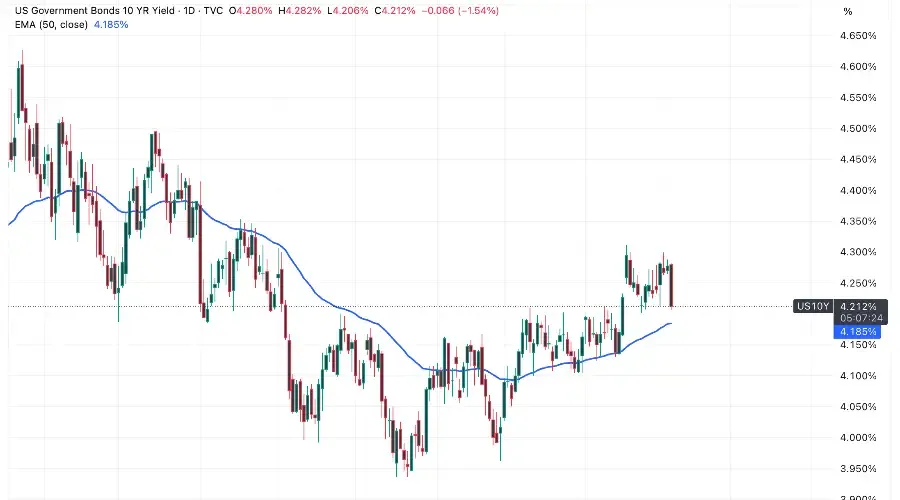
At the same time, rate-sensitive sectors, including financials, may find support if Treasury yields drift lower on rising rate-cut probabilities. Whether that support materializes depends less on equity headlines and more on how bond markets respond.
So far, the reaction has been measured.
Why Yields Matter More Than Equities Here
Equity markets can absorb mixed labor data as long as rates remain stable. A decisive move lower in Treasury yields would reinforce the idea that policy support is coming, cushioning growth concerns.
If yields fail to respond, however, labor weakness risks being interpreted as a pure growth negative, rather than a policy-positive development.
That distinction will shape how this data is ultimately absorbed.
Signal Versus Noise
The signal is a gradual cooling trend in labor conditions that adds uncertainty to the growth outlook.
The noise would be overreacting to a single data release without confirmation from yields, earnings, or broader economic indicators.
At this stage, markets appear to be digesting rather than repricing aggressively.
Bottom Line
Labor market data is softening, but not collapsing.
For equities, that creates an uneasy balance between rising rate-cut expectations and growing concerns about demand and earnings momentum. How markets resolve that balance will depend less on today’s numbers and more on how rates, risk appetite, and forward guidance evolve from here.
For now, labor data is complicating the picture - not defining it.
This blog is for educational and informational purposes only. It is not financial, investment, or trading advice, and it does not recommend buying or selling any security, asset, or strategy. Markets are uncertain and can move in ways that differ from historical patterns or examples discussed here. Always do your own research, consider your personal risk tolerance and financial situation, and, if needed, consult a qualified financial advisor before making any investment decisions.