
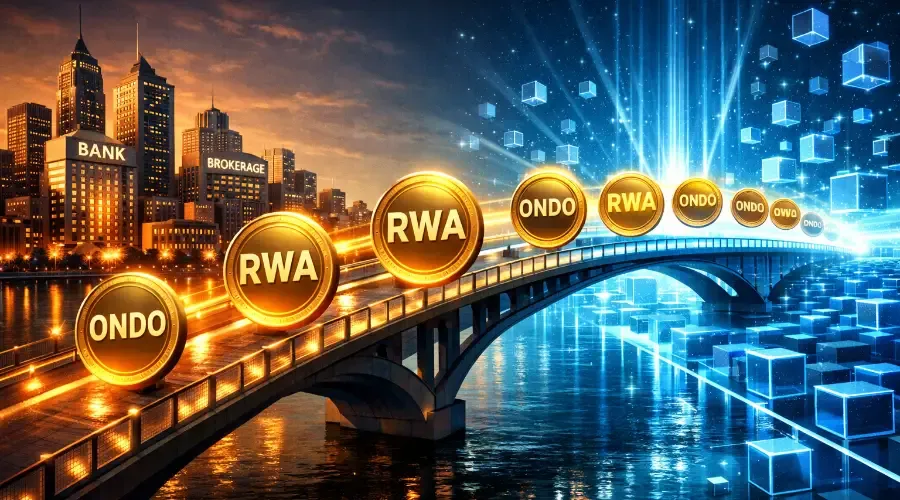
The line between traditional finance and crypto just blurred again. A new SEC filing shows 21Shares, a major European crypto ETP issuer with several billion dollars in assets, is seeking approval for a spot ETF tied to the ONDO token, giving U.S. investors packaged exposure to one of the leading real‑world asset (RWA) protocols. If approved, it would be among the first exchange‑traded products focused on an RWA governance token available to mainstream investors.
This is more than “another crypto ETF.” RWA platforms aim to tokenize traditional instruments like Treasuries, bonds, and credit, a market measured in the tens of trillions of dollars. An ONDO‑linked product is a signal that large asset managers see tokenization as a serious, scalable theme rather than a niche DeFi experiment.
What 21Shares Is Proposing
Key elements of the filing, based on current reporting and how similar products are structured:
- Issuer: 21Shares, which already runs physically backed ETPs on BTC, ETH and other majors in Europe and has been expanding into U.S.‑listed products.
- Underlying asset: The ONDO token, governance token for the Ondo Finance ecosystem.
- Structure: A spot‑style fund that would hold tokens in custody rather than using futures or synthetic exposure, similar in concept to spot BTC/ETH funds.
- Timeline: As with other 1940 Act / 1933 Act products, the SEC review window can range from a few months up to ~240 days depending on comments and amendments.
Ondo Finance has emerged as a prominent RWA protocol by focusing on tokenized U.S. Treasuries and investment‑grade credit, partnering with regulated asset managers and custodians to bring off‑chain yield into on‑chain wrappers. The ONDO token is designed to coordinate protocol governance and share in fees from RWA products, which makes it a natural focal point for speculative and long‑term exposure when institutions want a “bet on RWA infrastructure.”
What Real-World Assets (RWAs) Actually Are
“RWA” is simply crypto’s label for tokenized versions of traditional financial assets—for example:
- Short‑duration Treasury bills.
- Investment‑grade corporate credit.
- Factored receivables, real estate cash flows, or other yield‑bearing claims.
Instead of only buying these through a broker in whole‑lot sizes and limited hours, tokenization aims to offer:
- 24/7 trading and settlement on public blockchains.
- Fractional ownership (for example, $50 of a Treasury‑backed token instead of a full lot).
- On‑chain composability: tokens can be posted as collateral in lending markets or used in structured DeFi products.
- Global access where local rules allow, since the access point is a wallet rather than a specific national brokerage account.
Ondo and a small group of similar protocols work with traditional custodians and trust companies to hold the real assets while issuing claims against them on‑chain, attempting to stay within existing securities and fund frameworks.
Why an ONDO ETF Changes the Access Equation
Today, a pension fund or financial adviser that wants RWA‑protocol exposure faces several hurdles:
- Direct exchange accounts with stringent crypto compliance.
- Crypto custody and insurance arrangements.
- Separate workflows for tax reporting and internal risk systems.
A spot‑style ONDO ETF dramatically lowers that friction:
- It trades through existing brokerage rails (Schwab, Fidelity, institutional platforms) like any other equity or ETF.
- Custody and operational risk sit with the ETF sponsor and its service providers.
- Tax and compliance teams treat it as one more listed fund, not a new asset class.
The historical pattern from BTC and ETH funds is instructive: once the product wrapper is familiar, institutions that were previously interested‑but‑blocked can begin to allocate in size. For a mid‑cap governance token, even a few hundred million dollars in net inflows over time can be significant relative to free float.
Potential Impact Across Crypto
ONDO: Direct Exposure
If the filing advances, ONDO is the direct focal point:
- The token is already a proxy for RWA growth and protocol adoption.
- An ETF would need to source ONDO on behalf of shareholders, creating an incremental buyer that does not sell unless investors redeem.
Short‑term, filings and comment letters tend to drive headline‑driven volatility rather than fundamental change. Medium‑term, actual approval and launch would be the more important step: at that stage, flows into the ETF translate into transparent on‑chain demand.
RWA Sector: Legitimacy Boost
Beyond ONDO itself, the RWA category as a whole benefits from an established issuer putting its brand behind the theme:
- MakerDAO and other protocols already hold significant tokenized Treasuries as part of their collateral mix.
- Several credit and real‑estate tokenization platforms are building similar pipelines of off‑chain assets brought on‑chain.
A listed product focused on an RWA governance token sends the message that tokenization is not just theory; it’s something asset managers expect to market to clients in fund form.
Wider Crypto: Another Step in the “Legitimization Ladder”
The sequence over the last few years looks roughly like:
- Spot BTC ETFs → “digital gold” becomes allocatable.
- Spot ETH ETFs → smart‑contract platforms become allocatable.
- RWA‑linked products → tokenized traditional assets and yield become allocatable.
Each step doesn’t guarantee higher prices on its own, but together they push digital assets closer to being treated as infrastructure and wrappers for existing financial activity, rather than only speculative instruments.
What to Watch from Here
- Additional filings or competitors.
If other issuers submit their own ONDO or RWA‑themed funds, it signals that multiple firms believe there is real client demand, which tends to increase the odds that some version eventually gets approved. - SEC feedback tone.
Comment letters around custody, market manipulation, and how underlying RWAs are held will give clues about how regulators are thinking about tokenized assets relative to prior BTC/ETH products. - Ondo’s underlying RWA growth.
Metrics such as tokenized Treasury TVL, number of institutional counterparties, and on‑chain volume will matter more over the long term than any single ETF headline.
Trader and Investor Takeaways
- For speculators, ETF filings often create news‑driven trading windows but the path to approval can be long and uneven. Short‑term traders may treat key resistance zones as places to pare risk rather than assume a straight line higher.
- For longer‑horizon investors, the bigger story is that tokenized Treasuries and credit are moving into mainstream wrappers, which supports the thesis that RWA infrastructure could become a lasting part of the crypto stack.
- For DeFi users, sustained RWA growth can improve capital efficiency by adding more yield‑bearing, lower‑volatility collateral types to lending markets and structured products.
Bottom Line
A proposed ONDO ETF from a major issuer is an early but important signal that real‑world asset tokenization is graduating from niche DeFi narrative to something traditional asset managers want to package for clients. ONDO stands to benefit most directly if a product launches and gathers assets, but the broader implication is that crypto is increasingly being used as plumbing for familiar instruments—Treasuries, bonds, credit—rather than existing only as a separate speculative arena.
As with all ETF stories, filings are the start, not the finish. The real test will be what regulators approve and how much capital ultimately flows into RWA‑linked products over the next cycle.
⚠️ Disclaimer: This article is for educational and informational purposes only and is not investment, trading, or financial advice. Digital assets and RWA‑linked tokens are volatile and involve significant risk. Always conduct your own research or consult a qualified financial advisor before making investment decisions.