
BreakoutBulletin | Brands & Positioning
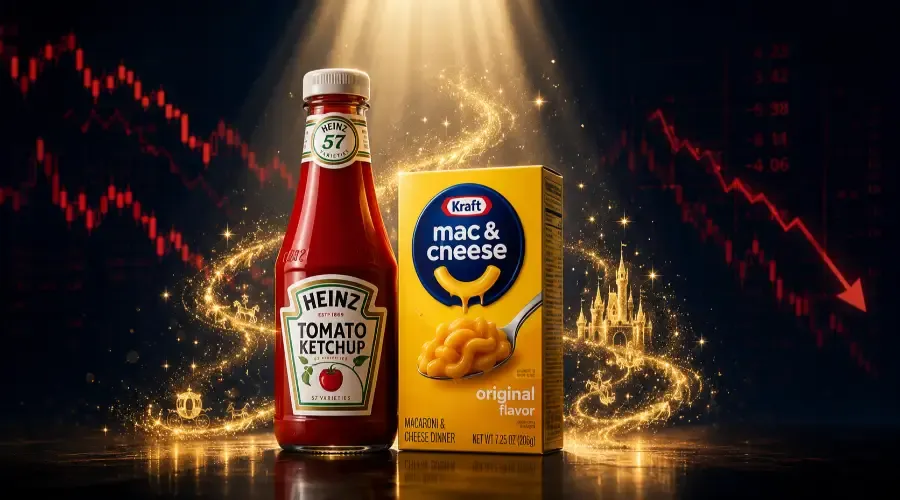
On July 21, Kraft Heinz and Disney announced a long-term, multi-year partnership bringing ten Kraft Heinz brands, including Heinz, Philadelphia, and Kraft Mac & Cheese, into Disneyland, Walt Disney World, and Disney Cruise Line across North America. The rollout covers hundreds of dining locations, new Heinz condiment stations, and integrated marketing across Disney's media platforms, launching this summer.
Read as a menu update, it is minor. Read as a signal, it is the third move in a pattern that tells the real story.
The Pattern, Not the Headline
This is not a one-off. In March 2026, Kraft Heinz became the NFL's first-ever condiment partner in a five-year global deal spanning roughly 20 brands. It runs a Heinz partnership at the Chicago Cubs' Wrigley Field. And on the last earnings cycle, management said it was raising marketing spend to about 5.5% of net sales, up from 4.9%, to meet consumers at what it called the intersection of food, sports, and entertainment.
The Disney deal is that strategy paying for another venue. The company is systematically renting cultural relevance, buying its way into the places families already gather rather than waiting for legacy brands to pull shoppers down the grocery aisle on their own.
Why the Renting Is Happening
The context the celebratory coverage tends to skip: Kraft Heinz is doing this from a position of weakness, not strength. Organic net sales fell 3.4% in 2025, and management has guided 2026 to decline somewhere between 1.5% and 3.5%. The company also paused its plan to split the condiment and grocery businesses, shelving a structural fix in favor of a marketing-led one.
That reframes the Disney tie-up entirely. This is not a healthy brand adding sparkle. It is a portfolio in organic decline spending more to borrow the relevance its own labels have been losing. The strategy is coherent and the partners are premium, but the reason for the spend sits underneath every press release, and it is worth keeping in view.
What Disney Gets
The other side is cleaner. Disney continues converting its franchise into a licensing and experiential commerce platform, extending character power well beyond tickets and streaming into food and branded experiences. Kraft Heinz is another family-friendly partner that fits the parks environment and pays for placement inside Disney's storytelling footprint. For Disney, the deal is low-risk incremental monetization of an asset it already owns.
The Investment Read
For Kraft Heinz (NASDAQ: KHC), the honest framing is a strategic marketing development first and a financial event a distant second. No deal value was disclosed, and a parks-and-cruise dining presence does not move a multi-billion-dollar revenue base on its own. Investors have historically responded to visible brand catalysts at mature consumer companies, but the effect tends to be sentiment before substance, and sentiment fades unless the underlying numbers follow.
The variable that actually matters is execution across the whole pattern, not this deal in isolation. Does the sports-and-entertainment marketing push slow the organic-sales decline? Does higher marketing spend convert into shelf movement, or just into visibility that looks good in a deck? The NFL deal, the Disney deal, and the raised budget are one bet placed in three venues. They get judged together, on whether 2026's guided sales decline narrows.
For readers who want to pressure-test a brand catalyst story like this one themselves, the method matters more than the headline. Separating a genuine strategic shift from announcement glow is exactly the kind of judgment covered in What AI Is Not Good at for Traders - Honest Limitations, since a friendly-sounding partnership is precisely where an AI summary will tell you what you want to hear rather than what the sales line says. The harder work reading Kraft Heinz's actual organic-sales trajectory and marketing-spend guidance against the co-branding narrative is the process laid out in How to Analyze Growth, Margins, and Cash Flow Using AI and, for the fuller thesis-building workflow, Fundamental Research with AI - Complete Workflow.
Signal and Noise
The signal is the trajectory of organic sales against a rising marketing budget. If the decline flattens over the next few quarters, the relevance-renting thesis is working and Disney becomes one proof point in a turnaround. If sales keep sliding while spend climbs, the partnerships are expensive theater layered over a portfolio problem that co-branding cannot fix.
The noise is the announcement glow itself, the Mickey-meets-mac-and-cheese framing that generates a day of friendly headlines. Character partnerships photograph well. Whether they change what lands in a grocery cart is a separate question, answered in the sales line, not the press release.
The deal is real and the partners are strong. The thing to watch is not the magic. It is whether a legacy portfolio can buy back relevance faster than it is losing it.
This content is for educational purposes only and does not constitute investment advice or a recommendation to buy or sell any security. Figures on Kraft Heinz sales and guidance are drawn from company reporting; verify against primary filings before acting. Markets involve risk.