
BreakoutBulletin | Markets Intelligence | March 2026
The Morning Oil Jump That Left Retail Traders Confused
Last Monday, a trader in Singapore opened his trading screen at 9:15 AM. Oil was already up sharply. Brent crude had surged more than 8% overnight. News alerts were pouring in—reports of U.S.-Israeli strikes, Iranian retaliation, and disruption around the Strait of Hormuz.
The trader watched energy stocks spike while the broader equity market dipped. Defense contractors jumped early in the session, then some of them faded as the market slid.
To someone following only headlines, the moves looked chaotic. Oil up, stocks down, then partial recovery. Defense rising but not always holding gains.
But professional traders were not confused. They were watching something else entirely: positioning.
They were asking questions like: Where are hedge funds adding exposure? Are producers hedging future supply? Are traders buying options for upside oil risk? Is capital rotating into defense stocks or simply hedging market risk?
The difference between reacting to headlines and reading positioning is enormous. Once you understand that positioning map, market behavior during geopolitical shocks suddenly makes a lot more sense.
This article walks through that map.
What Is a "War Premium" in Oil Markets?
Quick Definition: A war premium is the extra price traders add to commodities like oil when geopolitical conflict threatens supply.
It's essentially an insurance cost embedded in prices. Think of it like airline tickets before a major storm. Even if flights are still operating, prices rise because travelers fear disruption. Oil markets behave in a similar way. When supply routes look vulnerable—especially major ones like the Strait of Hormuz—traders add a risk buffer to prices.
Why the Strait of Hormuz Matters So Much
To understand the current oil reaction, you need one number: about 20% of globally traded oil moves through the Strait of Hormuz.
Picture a narrow maritime chokepoint where tankers carrying crude from Saudi Arabia, Iraq, Kuwait, and the UAE pass through daily. When conflict threatens that route, markets respond immediately.
Here's the chain reaction:
-
Traders fear supply disruption
-
Oil futures rise quickly
-
Energy stocks rally
-
Inflation expectations rise
-
Equity markets wobble
That sequence has played out repeatedly during geopolitical crises. But something interesting is happening beneath the surface of this rally. Three different positioning dynamics are unfolding at once.
The Three Forces Moving Oil Right Now
1. Hedge Funds Are Aggressively Long Crude
Speculative traders have pushed net-long oil positions to multi-year highs. Funds are buying crude futures because they believe geopolitical risk could push prices higher.
Imagine a trader named Alex who runs a macro hedge fund. When the first reports of shipping disruption appeared, Alex added long Brent futures. His reasoning was simple: if the Strait closes even partially, supply tightens immediately. Thousands of traders made the same calculation.
The result? Large speculative positioning in oil markets.
But here's the catch. Heavy speculative positioning can amplify moves both directions. If tensions escalate, those long positions push oil even higher. If diplomacy suddenly emerges, traders rush to exit. Prices can fall just as fast. Crowded trades can unwind violently.
2. Oil Producers Are Selling Future Contracts
While speculators are buying near-term oil contracts, producers are doing the opposite. Many U.S. shale companies are hedging future production.
Here's a simple example. A Texas producer expects to pump oil in 2027. After the price rally, they sell futures contracts today to lock in those higher prices. This protects them if oil falls later.
Data from hedging firms suggests producers are actively selling long-dated WTI contracts. That creates a curious effect in the futures curve: near-term prices rise, longer-dated contracts stay more restrained, and the curve becomes steeper at the front but flatter later.
In plain English: the market thinks the disruption may be temporary.
The trade works if prices stabilize or fall. But if conflict escalates further, producers who hedged early may watch prices rally without them.
3. Physical Oil Markets Are Tightening
Beyond financial markets, the physical oil trade is also reacting. Refiners need crude immediately. If tanker routes are uncertain, they scramble to secure alternative barrels. This pushes front-month crude spreads wider.
Think of it like grocery stores during a storm warning. People rush to buy supplies today rather than next week. Energy markets behave the same way. The strongest demand appears in the immediate delivery window.
Scrambling for barrels creates acute near-term tightness. But sustained high prices eventually trigger demand destruction, which caps the upside.
Why Defense Stocks Are Also Moving
The conflict triggered a rapid rotation into defense companies. On the first trading day after escalation:
| Company | Ticker | Approx Move |
|---|---|---|
| Northrop Grumman | NOC | +3-5% |
| RTX Corp | RTX | +3-5% |
| Lockheed Martin | LMT | +4-6% |
| L3Harris | LHX | +3-5% |
But something interesting happened later in the week. Some defense stocks fell alongside the broader market.
Why? Because professional traders rarely make a simple "buy defense" bet. Instead they run relative trades. For example: long defense contractors, short index futures (S&P 500). This protects them if the broader market drops.
Imagine a portfolio manager named Elena. She believes missile defense companies will benefit from the conflict. But she also worries that higher oil prices could slow the global economy. So she buys defense stocks and simultaneously hedges with index shorts. This approach explains why defense names sometimes rise and fall with the broader market. The position isn't purely directional.
The Classic Geopolitical Trade Pattern
Across asset classes, a recognizable pattern appears during oil shocks. Typical positioning includes:
-
Long energy stocks: Higher oil prices boost energy company revenue
-
Long defense companies: Military spending often increases during conflicts
-
Short broad equity indices: Higher oil acts like a tax on the global economy
-
Buying crude call options: Traders hedge against further oil spikes
-
Buying equity put protection: Investors guard against stock market declines
Each of these trades expresses a slightly different view of the same risk.
Why Bond Markets Are Also Reacting
Oil shocks often influence inflation expectations. When energy prices rise sharply, investors start worrying about inflation returning. That affects Treasury bonds. Long-dated bonds suffer because inflation erodes future purchasing power.
As a result, traders often reduce exposure to longer-term bonds during oil spikes. The yield curve can steepen as markets price higher inflation risk.
If oil-driven inflation persists, markets may start pricing tighter monetary policy-which pressures bonds further.
The Four Variables Driving Markets Next
Right now, the war premium embedded in oil and defense stocks depends on four major factors.
1. Strait of Hormuz Shipping
This remains the single most important variable. If tanker traffic normalizes, oil prices could retreat quickly. If disruption expands, prices may climb further.
2. OPEC Production Policy
OPEC+ had already planned modest production increases. But geopolitical tension complicates the picture. Some producers might increase output to stabilize prices. Others may prefer higher prices. Market participants are watching Saudi policy carefully.
3. U.S.–Iran Diplomatic Signals
Markets react rapidly to diplomatic developments. Earlier this week, crude briefly pulled back when reports of diplomatic outreach emerged. Even a hint of negotiation can trigger position unwinding.
4. U.S. Economic Data
High oil prices pressure consumers. If economic data weakens while oil remains elevated, investors start worrying about stagflation. That combination tends to be negative for equities.
The Professional Positioning Map
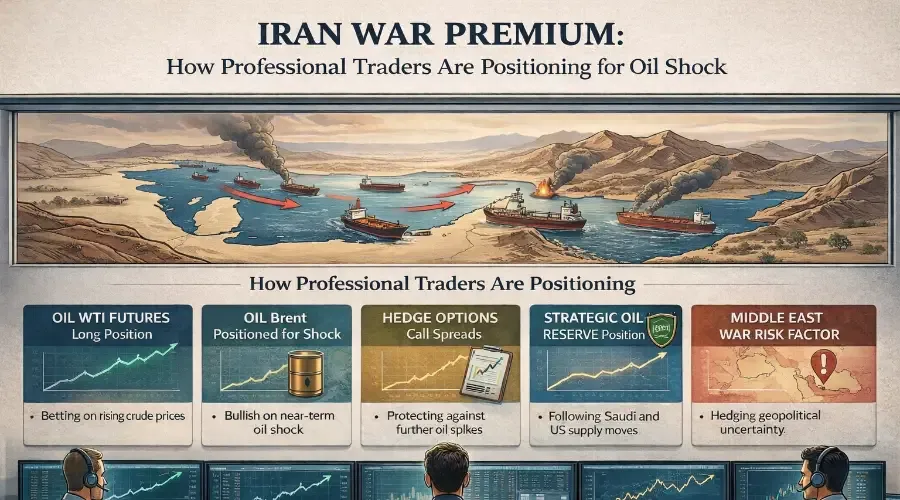
Here's a simplified snapshot of current positioning trends:
| Asset | Positioning Trend |
|---|---|
| Front-month oil futures | Speculative longs elevated |
| Long-dated oil contracts | Producers hedging |
| Defense stocks | Tactical long positions |
| Energy stocks | Benefiting from crude rally |
| Equity indices | Hedge via short futures |
| Oil options | Strong demand for calls |
| Equity options | Increased downside protection |
This map explains why markets sometimes appear contradictory. Different participants are expressing different views simultaneously.
What Retail Traders Can Learn From This
For many individual traders, the market's reaction to geopolitical shocks feels chaotic. But it isn't random. Each move reflects positioning decisions made by thousands of institutions.
Understanding those decisions provides a powerful lens. Instead of asking only "Why did oil move?" ask deeper questions: Are hedge funds adding or reducing exposure? Are producers hedging future supply? Are traders buying options protection?
Those clues reveal the market's true narrative.
Frequently Asked Questions About Oil War Premiums
What causes oil prices to rise during wars?
Oil prices rise because traders fear supply disruption. If conflict threatens pipelines or shipping routes, markets add a risk premium. Even small disruptions can push prices higher quickly.
Does every conflict create an oil spike?
Not always. Oil markets react most strongly when supply routes are involved. Conflicts near major production regions or transport routes have the biggest impact.
Why do oil prices sometimes fall after war headlines?
Markets react not only to events but to expectations. If traders already priced in risk, new information may trigger profit-taking instead of further buying.
How do professional traders hedge geopolitical risk?
They often combine multiple positions. For example, long energy stocks, short index futures, and oil call options.
Can oil spikes hurt the stock market?
Yes. High oil prices increase costs for businesses and consumers. That can slow economic growth and pressure corporate profits.
The Bigger Lesson
The trader in Singapore closed his screen on Friday and thought back to Monday morning. The volatility that once looked chaotic now told a coherent story. Hedge funds betting on escalation. Producers locking in prices. Refiners scrambling for barrels. Defense stocks hedged against the broader market.
Every headline was just new information feeding into the same four variables: shipping routes, diplomacy, production policy, and economic data.
That's how professionals navigate the noise. They don't react to headlines. They watch what the headlines do to positioning.
BreakoutBulletin | Markets Intelligence | March 2026
Educational commentary only. Not investment advice.