
BreakoutBulletin | Travel & Markets Desk
This story got significantly bigger throughout the day.
What started as a temporary FAA ground stop at Dallas-Fort Worth International Airport due to fast-moving severe thunderstorms has expanded into a multi-hour network disruption that continues to build.
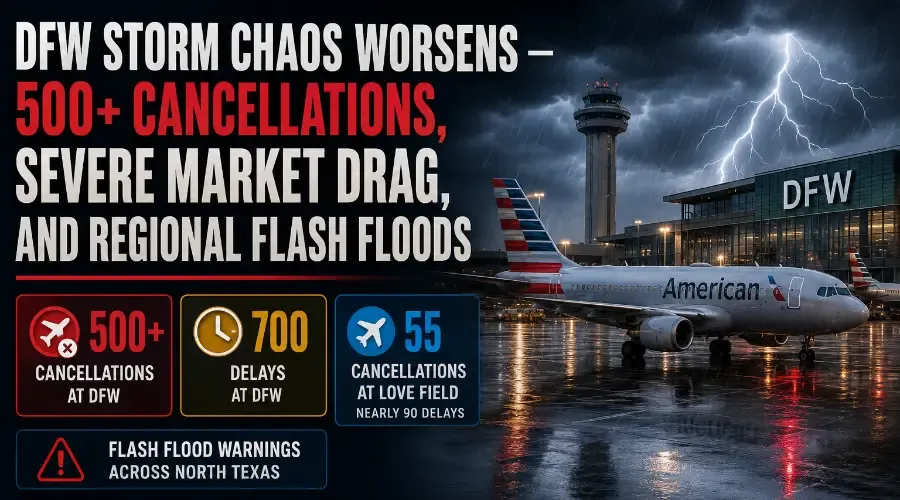
The latest data from FlightAware shows DFW flight cancellations crossing 500, with nearly 700 Dallas airport delays recorded at DFW alone. Dallas Love Field added its own 55 cancellations and nearly 90 delays on top of that.
The combined disruption across both major airports has pushed total cancellations well past 400 flights, with numbers continuing to climb as operations struggle to reset. This wasn't a brief airfield delay that cleared up once the lightning passed; it has transformed into a massive network bottleneck with cascading effects stretching deep into the night.
What Changed: A Slower, Harder-to-Clear Backlog
Early coverage focused heavily on the initial wave of grounding. However, the updated picture reveals a more systemic issue on two fronts:
The FAA Response Shifted:
The air traffic management strategy expanded from a total FAA ground stop to a prolonged ground delay and departure slowdown. This kept arrivals and departures moving at severely reduced rates for hours.
While a ground stop halts traffic entirely, a sustained ground delay creates a slow, compounding backlog that can often be harder for airlines to untangle than a single, clean pause.
The Weather Threat Widened into Flash Flooding:
The National Weather Service issued flash flood warnings across Dallas, Fort Worth, and the wider North Texas region. The operational complexity is no longer restricted to airfield safety and lightning strikes; heavy rain and regional flooding have created a wider geographic threat.
This combination of extended flight slowdowns and a regional flash flood threat is precisely what turns a manageable weather delay into a multi-day network crisis.
Why the DFW Hub Amplifies the Crisis
Because DFW operates as the primary fortress hub for American Airlines (accounting for over 65% of the airport's daily traffic), disruptions here immediately ripple across the domestic aviation sector.
American Airlines has naturally carried the heaviest operational load. When a major hub experiences Texas severe weather travel disruptions of this scale, it impacts far more than local passengers:
- Inbound aircraft are diverted to alternate cities, leaving them completely out of position.
- Inbound flight crews hit their federally mandated duty-hour limits ("timing out"), rendering them unavailable for late-evening or next-morning legs.
- Connecting passengers miss their banks, causing an immediate spike in rebooking demand.
- Hub backlogs almost always outlast the storm systems that trigger them. Long after the skies above North Texas clear, displaced crews, misrouted aircraft, and congested gates will keep the system running behind schedule.
The Market Reaction: Airline Stocks Take a Hit
From an investment perspective, these operational bottlenecks carry massive, immediate financial penalties. The stock market reacted in real-time on Tuesday as the severity of the DFW gridlock became clear:
| Ticker | Company | Tuesday Close | Daily Change | Focus Area |
|---|---|---|---|---|
| AAL | American Airlines Group | $12.06 | -2.43% | Primary DFW Hub Operator |
| LUV | Southwest Airlines Co. | $37.35 | -2.60% | Major Love Field Presence |
| JETS | U.S. Global Jets ETF | Sector Drag | Negative | Broad Industry Pressure |
The Cost of Chaos: For airlines, a disruption of this scale ruins the day's unit economics. Mass cancellations trigger immediate revenue losses via travel waivers, passenger re-accommodation costs, unexpected hotel vouchers, and steep overtime pay for ground crews and gate agents.
Furthermore, this micro-operational shock hits an industry already dealing with macro headwinds. Airline stocks have faced ongoing volatility this month due to sticky jet fuel costs and sector-wide capacity adjustments. When a major hub like DFW bottlenecks right before a high-revenue period, algorithmic trading models quickly price in the short-term margin hit.
The Holiday Nightmare: What This Means for Travelers
The timing of this operational slowdown could not be worse. The aviation network is currently preparing for the massive Memorial Day travel surge, leaving commercial flights operating at near-maximum capacity.
A few critical patterns are playing out for stranded passengers:
Vanishing Rebooking Inventory:
Early in a weather event, open seats on later flights make rebooking relatively straightforward. But with over 500 cancellations hitting right before a major holiday weekend, alternative seats are practically non-existent.
Residual Wednesday Effects:
Because of the sheer volume of out-of-position crews, Wednesday morning schedules are highly likely to suffer from residual "hangover" delays as airlines scramble to reset their networks.
No Secondary Workaround:
Dallas Love Field is absorbing the exact same storm system, meaning passengers cannot simply swap tickets to Southwest Airlines to escape the gridlock.
Corporate Compensation & Airline Waivers
In response to the mounting crisis, carriers have activated American Airlines travel waivers and regional flight alerts. These policies allow passengers traveling through affected Texas corridors to alter their itineraries without standard change fees or fare-difference penalties, provided they stay within the specified rebooking windows.
Given the scale of the cancellations, digital rebooking queues via airline apps are heavily congested, and phone wait times are significantly extended.
The Bottom Line
What began as a localized thunderstorm delay has ballooned into one of the largest single-day operational disruptions the Texas corridor has seen this spring. With combined cancellations soaring past 500, a visible drop in key equities like AAL and LUV, and regional flash flood warnings active, the recovery process will be a long haul.
For investors, this event highlights the vulnerability of highly centralized hub networks during peak seasonal travel periods and demonstrates how quickly weather risks convert to equity downside. For passengers traveling through Wednesday, checking real-time flight statuses, monitoring digital apps, and proactively verifying waiver eligibility remain the only practical moves.
Based on real-time FAA data and market equity tracking for the North Texas aviation corridor. BreakoutBulletin provides macro operational updates relevant to travelers, retail sector analysts, and market investors monitoring transportation networks.