
AI Infrastructure & Physical Constraints
By Manish T. · BreakoutBulletin
Executive Summary
The Reallocation: Top foundries (TSMC, Samsung) are shrinking 8-inch mature wafer footprints to focus on high-margin advanced nodes, causing 2026 8-inch capacity to contract by roughly 2.4%.
The AI Surge: AI servers require up to 80+ power management ICs (PMICs), compared to roughly 30 in legacy x86 servers.
The Spillover: Price hikes of 10–20% on high-density PMICs are spreading past data centers into automotive and consumer electronics.
The received wisdom about “mature” chips is that they are in perpetual oversupply. Years of capacity expansion, much of it in China, created a glut. That story was true. It no longer is.
Quietly, the market for these unglamorous components has flipped from surplus to squeeze. The reason is genuinely counterintuitive.
The biggest chipmakers are reallocating capital away from these parts to chase AI. And AI itself is filling the gap they leave behind.
The result is a wave of price increases on components inside every AI server. The cost is now leaking into phones and cars.
What We’re Actually Talking About
These are not GPUs. The chips in question are power management ICs – PMICs – and related power devices.
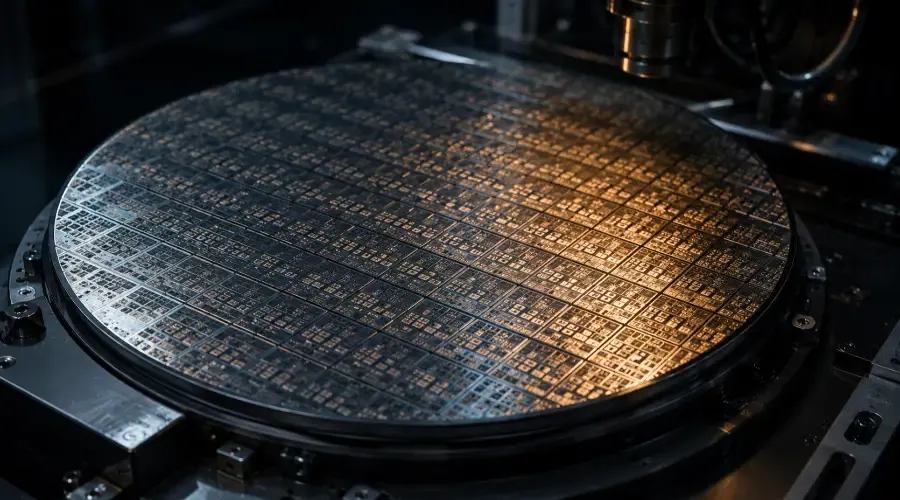
They regulate and deliver electricity to everything else on a circuit board, manufactured on older 8-inch wafer lines using processes designed for power handling, not raw computing speed.
Every AI server is stuffed with them. A GPU-dense AI training node can easily require 80 or more high-density PMICs to feed accelerators, networking cards, and auxiliary systems. A rack of power-hungry accelerators needs a small army of these chips.
Individually, they are cheap and boring – precisely why almost no one was watching while attention stayed fixed on expensive silicon. That inattention is the opportunity, because the supply picture underneath has changed materially.
Foundry Economics: How the 8-Inch Wafer Glut Became a Squeeze
Two things flipped the market.
First, economics. An advanced-node wafer can yield chips worth up to $20,000. An older 8-inch wafer sells for around $2,500.
Faced with that gap, the two largest foundries – TSMC and Samsung – are selectively pruning their 8-inch footprints. They are not exiting entirely, but deliberately shrinking exposure to commoditized mature-node production. Samsung closed an 8-inch fab this year; TSMC has been winding down or converting certain lines.
Global 8-inch capacity is now contracting. Industry data shows a decline of roughly 2.4% in 2026, with the trend staying negative into 2027. Smaller specialty foundries are adding modest capacity, but nowhere near enough to offset the pullback of the leaders.
Second, demand. AI servers consume enormous quantities of high-current, multi-phase power ICs – the kind that manage the intense, spiky loads of GPUs. That demand has pushed utilization at the remaining 8-inch lines from around 75–80% in 2025 up to 85–90% in 2026.
Shrinking supply meeting rising demand. The glut evaporated. Foundries started raising prices.
| Metric | Legacy x86 Server | GPU AI Training Node |
|---|---|---|
| PMIC Count per Board | ~30 units | 80+ units |
| 8-Inch Wafer Revenue | ~$2,500 | ~$2,500 (Contracting Supply) |
| Lead Times (2025 vs 2026) | ~21 Weeks | 26 to 30+ Weeks |
| PMIC Pricing Hikes | Baseline / Flat | +10% to +20% |
The price increases are segmented. Commodity low-dropout regulators and simple MOSFETs are seeing single-digit hikes. Higher-density PMICs used in server motherboards and GPU power delivery have faced 10–20% increases. A further round on premium power-management ICs is reportedly being prepared for late 2026 and into 2027.
Why This Is a Cost Story
The story is not whether AI demand is strong. It is the bill.
Power ICs are a small line item on any single device. But they are everywhere. A 10–20% increase on high-density PMICs consumed by AI hardware is structural bill-of-materials inflation, quietly raising the cost of AI infrastructure independent of the GPU.
The expensive, visible parts get all the attention. The cheap, invisible parts are where a surprising amount of cost inflation is now accumulating.
The Spillover Into Phones, Cars, and PCs
The squeeze doesn’t stay in the data center. The same 8-inch lines that produce server PMICs also make analog chips, display drivers, and automotive power devices.
Lead times have stretched. According to distribution tracking, waits on representative power ICs have gone from around 21 weeks a year ago to past 26 weeks. For premium server-grade PMICs, they have extended beyond 30 weeks.
Price increases have spread across all customers – not just AI buyers. PC and notebook makers have already begun stockpiling these components, bracing for higher costs later in the year – the same defensive behavior now visible around the memory shortage.
A squeeze that begins in AI power delivery resurfaces as higher costs and longer waits in ordinary consumer electronics.
Which Foundries and IDMs Hold Pricing Power (VIS, TXN)
While this is a cost story for buyers, certain suppliers are seeing pricing power return after years of margin erosion.
The remaining 8-inch pure-play foundries – names like Vanguard International Semiconductor (VIS) – and integrated device manufacturers with captive 200mm lines, such as Texas Instruments, benefit from tighter utilization and firmer pricing. This is not a recommendation; it’s a map of where the economics flow when a glut reverses.
Why It Won’t Ease Soon
The exit is deliberate and multi-year. TSMC and Samsung are not coming back to 8-inch in a meaningful way. The profit gap versus advanced nodes is too large and only widens as AI demand grows.
Modest capacity additions from smaller foundries won’t offset the retreat. Total 8-inch capacity is projected to keep shrinking into 2027. Meanwhile, the power IC count per AI server climbs with each new accelerator generation.
Vanguard chairman Leuh Fang warned on an early-August earnings call that 2027 price increases will be steeper than 2026’s. He added that the company’s new 8-inch expansion is already fully booked before production begins. When a major pure-play foundry is this confident about pricing a year out, the tightness is not a passing mismatch.
A Note on the Timeline
Mature-node lead times began stretching in early 2025, after a brief inventory correction. The current squeeze reflects a structural shift superimposed on a cyclical recovery. The deliberate capacity pullback by the largest foundries is the new, lasting factor. Recognizing this is not just a cycle but a structural reallocation separates this moment from prior mature-node shortages.
Where It Fits in the Bigger Picture
This is one more hidden input-cost bottleneck feeding the same picture as the memory shortage and the scramble for advanced packaging.
The pattern repeats: a specialized, concentrated, slow-to-scale input; AI absorbing the available supply; the cost surfacing in a boring line item before spilling into unrelated products.
The AI build-out’s real expenses keep accumulating in places the GPU headlines never look. The power chip – specifically the high-density PMIC category – is simply the latest example.
What Would Change the View
The squeeze eases if AI power-IC demand cools, capacity additions exceed expectations, or the leading foundries slow their retreat. It deepens if reallocation continues while AI-server build-outs keep pulling PMIC demand higher – the current trajectory.
The concrete signposts: utilization rates at top foundries, the pace and breadth of price rounds, and whether lead times keep stretching. As long as those point the same direction, the least glamorous chips in the server rack will keep getting quietly more expensive.
The Bottom Line
The AI story is almost always told at the top of the stack – the accelerator, the model, the breakthrough. But the costs keep piling up at the bottom, in the unglamorous components almost no one prices.
The mature-node glut becoming a squeeze is a clean case of the market working off an outdated narrative while reality flipped underneath it. For anyone trying to read this cycle, the edge is increasingly in noticing the boring parts. That’s where the AI build-out’s real costs, and its surprises, are now hiding.
The headline chip is rarely the one that determines what the whole system costs to build.
Note: Industry, capacity, utilization, and pricing figures are based on public sources including foundry earnings commentary (e.g., VIS Q2 2026 call), supply-chain research, and trade journal reports. Power IC count estimates draw on typical motherboard and accelerator power delivery architectures; exact figures vary by system design. All data reflects information available as of the publication date.
Related Reading
The Memory Shortage Behind the AI Boom: How HBM Demand Is Draining Conventional DRAM
It's Not the Wafer Anymore: How Advanced Packaging Became the Binding Constraint on AI Chips
Follow the Cargo: The AI Boom Is Hiding in Plain Sight in the U.S. Trade Deficit
Disclaimer
BreakoutBulletin publishes educational and analytical content only. Nothing here is investment, financial, legal, or tax advice, or a recommendation or solicitation to buy, sell, or hold any security. Past performance does not indicate future results. Readers should conduct their own research and consult a qualified, registered financial adviser before making any decision.